Dynamic and Kinesiology Taping in Mississauga
Dynamic and kinesiology taping is a supportive treatment used to assist muscles, joints, tendons, and ligaments during movement without significantly limiting mobility. At Get Back Physiotherapy, this technique is often incorporated into a broader rehabilitation plan for clients recovering from injuries, managing ongoing discomfort, or returning to work, sport, or everyday activities. We provide dynamic and kinesiology taping in Mississauga for individuals of all ages and activity levels, helping support movement while addressing the underlying cause of the issue through physiotherapy.
What Is Dynamic and Kinesiology Taping?
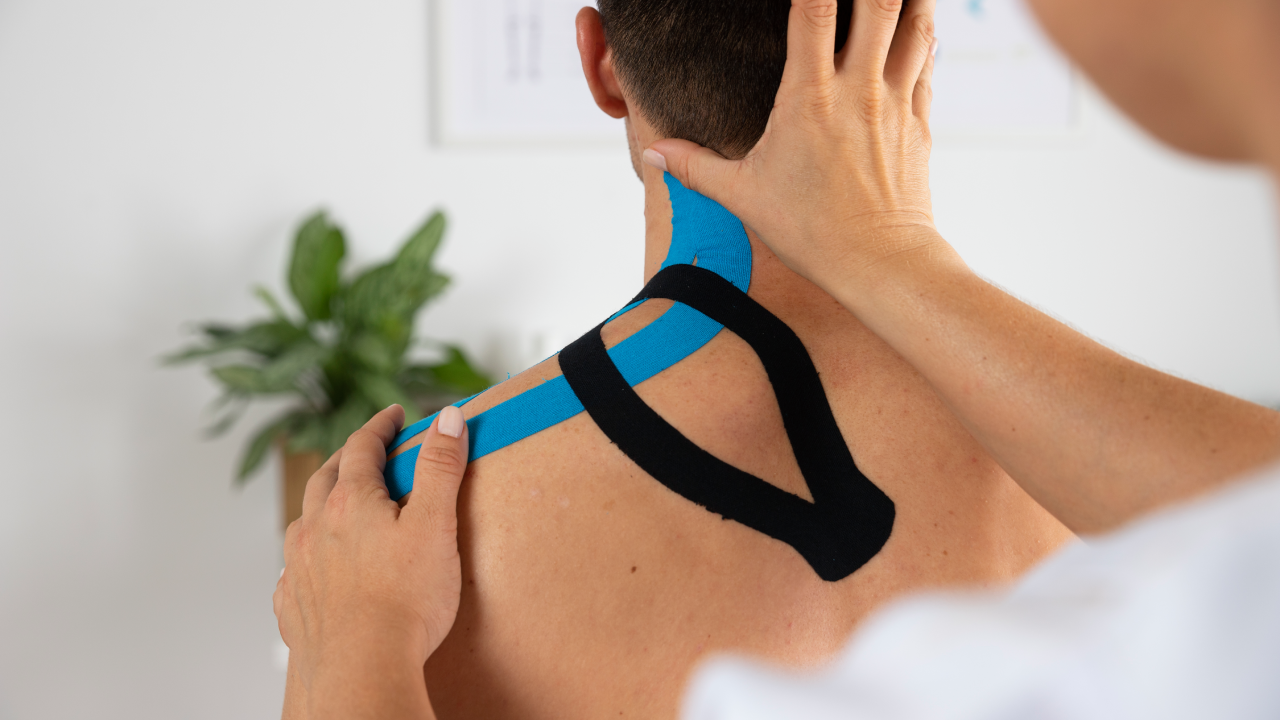
Dynamic and kinesiology taping involves applying elastic therapeutic tape to specific areas of the body based on an individual’s condition and movement patterns. Unlike rigid athletic tape, kinesiology tape stretches with the skin, allowing joints and muscles to continue moving through their natural range of motion.
Depending on the assessment findings, tape may be applied to:
- Muscles
- Tendons
- Ligaments
- Joints
- Areas affected by swelling
- Regions requiring postural support
The purpose of taping is not to replace rehabilitation but to complement it. It is commonly used alongside manual therapy, exercise therapy, mobility work, and movement retraining as part of a complete physiotherapy plan.
Who Can Benefit From Dynamic and Kinesiology Taping?
Dynamic and kinesiology taping may be suitable for many people experiencing musculoskeletal conditions or recovering from injury.
This service is commonly used for:
- Individuals recovering from sports injuries.
- Office workers with neck or shoulder discomfort.
- People managing back or joint problems.
- Athletes preparing for training or competition.
- Older adults seeking additional joint support.
- Individuals returning to activity after surgery.
- Workers with repetitive strain injuries.
- Active individuals managing muscle fatigue.
Every application is based on a physiotherapy assessment rather than applying tape solely based on symptoms.
Problems Dynamic and Kinesiology Taping Can Address
Dynamic and kinesiology taping may be used as part of treatment for many common conditions, including:
- Neck discomfort
- Shoulder conditions
- Rotator cuff irritation
- Tennis elbow
- Golfer’s elbow
- Wrist strain
- Thumb discomfort
- Lower back pain
- Hip conditions
- Knee pain
- Runner’s knee
- Patellar tracking concerns
- IT band irritation
- Shin splints
- Achilles tendon irritation
- Plantar fasciitis
- Ankle sprains
- Muscle strains
- Ligament sprains
- Swelling following injury
- Postural concerns during activity
Because every condition is different, tape placement is determined after assessing movement, strength, flexibility, and functional limitations.
Features and Deliverables
Individual Assessment
Before tape is applied, your physiotherapist evaluates your symptoms, movement quality, strength, posture, and daily activities. This helps determine whether taping is appropriate for your condition.
Why it matters
Correct tape placement depends on identifying the source of the problem rather than simply locating the area where symptoms are felt.
Condition-Specific Tape Application
The tape is applied using techniques selected for your condition and rehabilitation goals.
Applications may focus on:
- Muscle support
- Joint support
- Movement control
- Swelling management
- Postural correction during activity
Expected outcome
The tape provides support while allowing you to continue moving throughout your daily routine.
Integration With Physiotherapy
Dynamic and kinesiology taping is used alongside other physiotherapy treatments such as:
- Manual therapy
- Therapeutic exercise
- Stretching
- Strengthening
- Mobility training
- Functional movement retraining
Using multiple treatment methods helps address the contributing factors behind the condition rather than relying solely on tape.
How the Process Works
1. Initial Consultation
Your physiotherapist discusses your symptoms, health history, daily activities, and goals.
2. Physical Assessment
Movement, strength, flexibility, posture, balance, and functional tasks are evaluated to identify contributing factors.
3. Treatment Planning
A rehabilitation plan is created, and your physiotherapist determines whether dynamic or kinesiology taping is appropriate for your condition.
4. Tape Application
The tape is applied using techniques suited to your diagnosis and movement needs. Instructions are provided on caring for the tape and how long it should remain in place.
5. Progress Review
During follow-up visits, your physiotherapist evaluates how your body responds and adjusts the treatment plan if necessary.
6. Continued Rehabilitation
As recovery progresses, treatment continues with exercises and movement training to improve strength, mobility, and function.
Benefits of Dynamic and Kinesiology Taping
When incorporated into a physiotherapy program, dynamic and kinesiology taping may help:
- Support muscles during activity.
- Assist joint stability without restricting movement.
- Promote natural movement patterns.
- Encourage participation in daily activities.
- Support exercise performance during rehabilitation.
- Help manage swelling following certain injuries.
- Increase body awareness during movement.
- Complement strengthening and mobility exercises.
- Assist during return-to-work programs.
- Support return-to-sport rehabilitation.
Results vary depending on the condition, injury severity, and adherence to the rehabilitation plan.
Conditions We Commonly Treat
At Get Back Physiotherapy, dynamic and kinesiology taping may be incorporated into treatment for:
- Sports injuries
- Muscle strains
- Ligament sprains
- Shoulder injuries
- Knee injuries
- Foot and ankle conditions
- Neck pain
- Lower back pain
- Tendon conditions
- Repetitive strain injuries
- Running injuries
- Workplace injuries
- Post-operative rehabilitation
- Activity-related muscle fatigue
Your physiotherapist will determine whether taping is suitable after completing a thorough assessment.
Frequently Asked Questions
What is the difference between kinesiology tape and athletic tape?
Kinesiology tape is elastic and allows movement, while traditional athletic tape is generally rigid and intended to limit movement around a joint.
How long does the tape stay on?
Most applications remain in place for several days, depending on the location, skin condition, and daily activities. Your physiotherapist will provide care instructions.
Can I shower while wearing the tape?
Yes. Kinesiology tape is generally water-resistant and can usually be worn during normal bathing. Pat the tape dry afterward rather than rubbing it.
Is taping enough to treat my condition?
No. Taping is intended to complement physiotherapy and is typically combined with exercise, manual therapy, and movement education.
Will the tape restrict my movement?
No. The elastic properties of kinesiology tape allow movement while providing support.
Service Areas
Get Back Physiotherapy provides dynamic and kinesiology taping in Mississauga for clients throughout the community, including:
- Mississauga
- Mineola
- Lakeview
- Lorne Park
- Cooksville
Clients from surrounding neighbourhoods are also welcome.
Why Choose Get Back Physiotherapy?
At Get Back Physiotherapy, taping is never used as a standalone solution. Every treatment begins with a detailed physiotherapy assessment to identify the factors contributing to your condition. When dynamic or kinesiology taping is appropriate, it is integrated into a rehabilitation program that may include manual therapy, exercise, mobility work, and movement retraining. This approach helps support your progress throughout each stage of recovery while keeping your treatment focused on restoring function and movement.
Related Services
You may also be interested in:
- Physiotherapy
- Sports Injury Rehabilitation
- Manual Therapy
- Exercise Therapy
- Vestibular Rehabilitation
- Pelvic Health Physiotherapy
- Shockwave Therapy
- Custom Orthotics
- Workplace Injury Rehabilitation
Get Started
If pain, injury, or movement limitations are affecting your daily routine, Get Back Physiotherapy can assess your condition and determine whether dynamic and kinesiology taping is appropriate for your rehabilitation plan.
Address: 507 Lakeshore Rd E Ste 200, Mississauga, ON L5G 1H9, Canada
Phone: +1 416-259-0359
Contact our clinic today to schedule an assessment and begin your physiotherapy program in Mississauga.