
Shoulder Pain Treatment in Mississauga
Shoulder pain can make even simple activities difficult. Reaching into a cupboard, getting dressed, lifting groceries, driving, or sleeping comfortably may become frustrating when shoulder movement is limited or painful. Whether your symptoms started after an injury, developed gradually from repetitive activity, or appeared without a clear cause, addressing the problem early can help prevent further loss of movement and function.
At Get Back Physiotherapy, we assess the source of shoulder pain and create a treatment plan based on your symptoms, movement, daily activities, and goals. We work with clients throughout Mississauga, including Mineola, Lakeview, Lorne Park, and Cooksville, helping people return to work, sports, hobbies, and everyday activities with greater comfort and confidence.
What Is Shoulder Pain?
Shoulder pain refers to discomfort affecting the shoulder joint or the muscles, tendons, ligaments, or surrounding tissues that support movement. Since the shoulder has one of the widest ranges of motion in the body, it also depends on many structures working together. When one or more of these structures becomes irritated or injured, movement may become painful or restricted.
Shoulder pain can range from mild soreness to persistent discomfort that interferes with daily life. Some people notice pain only during certain movements, while others feel aching even at rest.
Common shoulder conditions include:
- Rotator cuff injuries
- Shoulder impingement
- Frozen shoulder
- Tendon irritation
- Bursitis
- Muscle strains
- Shoulder instability
- Arthritis affecting the shoulder joint
- Labral injuries
- Recovery following shoulder surgery
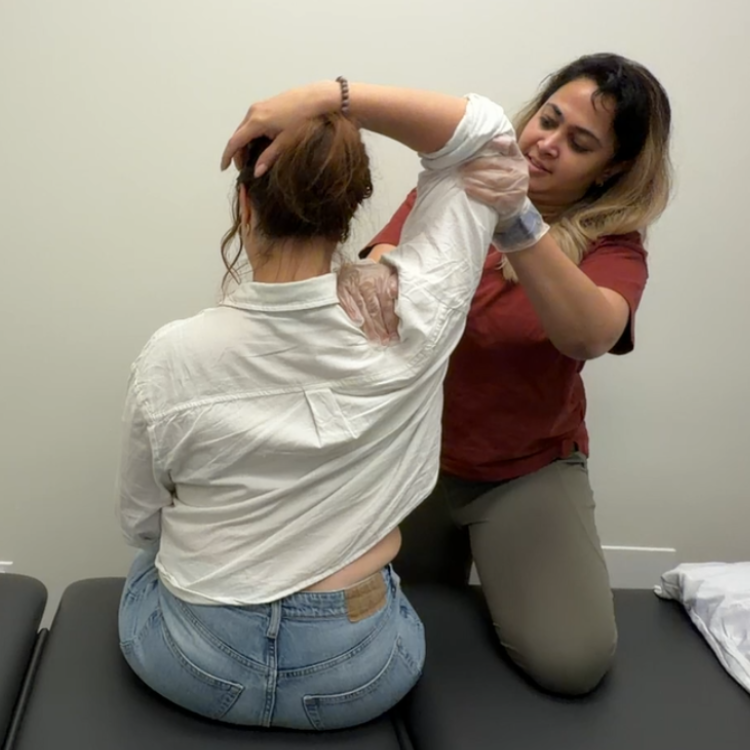
A thorough assessment helps identify the factors contributing to your symptoms so treatment can focus on improving movement and function.
Who Can Benefit From Shoulder Pain Treatment?
Physiotherapy may be suitable for many people experiencing shoulder discomfort, including:
- Office workers who spend long hours at a computer.
- Construction and trades workers performing overhead tasks.
- Athletes involved in throwing, swimming, tennis, or weightlifting.
- Older adults experiencing age-related joint changes.
- Individuals recovering after falls or accidents.
- People returning after shoulder surgery.
- Anyone with reduced shoulder mobility affecting everyday activities.
Whether your symptoms began recently or have been present for months, an assessment can help determine the next steps.
Problems Shoulder Pain Treatment Can Address
Shoulder pain may interfere with many parts of daily life. Physiotherapy focuses on identifying the source of the problem while improving movement and function.
Treatment may help address:
- Pain when lifting the arm.
- Difficulty reaching overhead.
- Stiffness limiting shoulder mobility.
- Weakness during lifting or carrying.
- Pain while sleeping on one side.
- Discomfort during sports or exercise.
- Reduced ability to perform work duties.
- Difficulty dressing or grooming.
- Shoulder instability after previous injuries.
- Ongoing symptoms following surgery.
Every shoulder condition presents differently, making an individual assessment an important first step.
Key Features of Shoulder Pain Treatment
Detailed Assessment
Your physiotherapist begins by discussing your symptoms, health history, daily activities, and movement limitations. Shoulder mobility, strength, posture, and surrounding joints are also evaluated.
What this includes
- Health history
- Functional assessment
- Range of motion testing
- Strength assessment
- Movement analysis
Why it matters
Finding the source of the problem helps direct treatment toward the factors contributing to your symptoms.
Hands-On Treatment
Manual therapy techniques may be used when appropriate to improve joint mobility and reduce stiffness affecting shoulder movement.
What this includes
- Joint mobilization
- Soft tissue techniques
- Assisted stretching
Expected outcome
Improved shoulder movement with greater ease during daily activities.
Exercise Program
Movement plays an important role in shoulder recovery. Exercises focus on restoring strength, mobility, coordination, and control.
Exercises may target:
- Rotator cuff muscles
- Shoulder blade muscles
- Upper back mobility
- Core stability
- Functional movement patterns
Your program progresses as your shoulder function improves.
Education and Activity Advice
Knowing which movements to modify and how to continue daily activities safely can support recovery.
This may include advice on:
- Workplace setup
- Sleeping positions
- Lifting techniques
- Activity progression
- Home exercises
How the Process Works
1. Initial Consultation
We discuss your symptoms, daily routine, previous injuries, and treatment history.
2. Physical Assessment
Your physiotherapist evaluates shoulder movement, strength, posture, flexibility, and functional activities.
3. Treatment Plan
A plan is developed based on your assessment findings and functional goals.
4. Treatment Sessions
Your appointments may include manual therapy, guided exercises, movement retraining, and education.
5. Progress Reviews
Your progress is monitored throughout your care, allowing exercises and treatment techniques to be adjusted as your shoulder function changes.
6. Return to Daily Activities
The final stage focuses on helping you move confidently during work, recreation, sports, and everyday tasks.
Benefits of Shoulder Pain Treatment
Many people seek physiotherapy because shoulder pain affects more than just the joint itself. Improving shoulder function can make everyday life easier.
Potential benefits include:
- Improved shoulder mobility.
- Increased strength.
- Greater ease reaching overhead.
- Improved posture and movement mechanics.
- Reduced stiffness.
- Improved ability to complete daily activities.
- More comfortable participation in sports and recreation.
- Improved confidence during movement.
- Support during recovery after shoulder surgery.
- Improved overall shoulder function.
The specific outcomes depend on your condition, overall health, and participation in your treatment program.
Who We Help
At Get Back Physiotherapy, we provide shoulder pain treatment for clients from many backgrounds, including:
- Office professionals
- Healthcare workers
- Students
- Seniors
- Tradespeople
- Athletes
- Active adults
- Individuals recovering after surgery
Our clinic supports clients with a wide variety of shoulder conditions affecting work, recreation, and daily living.
Frequently Asked Questions
What causes shoulder pain?
Shoulder pain can result from tendon injuries, muscle strains, bursitis, arthritis, repetitive movements, sports injuries, falls, or age-related changes. A physiotherapy assessment helps identify contributing factors.
Do I need a referral?
Many people can book physiotherapy directly without a physician referral, although some insurance providers may have their own requirements.
How many visits will I need?
The number of appointments depends on your diagnosis, symptom severity, activity goals, and how your shoulder responds throughout treatment.
Can physiotherapy help after shoulder surgery?
Yes. Physiotherapy is commonly recommended after many shoulder procedures to restore movement, strength, and functional ability, as recommended by your surgeon.
Should I continue exercising with shoulder pain?
Some activities may need temporary modification, while others may remain appropriate. Your physiotherapist can recommend exercises that match your stage of recovery.
Service Areas
Get Back Physiotherapy provides shoulder pain treatment for clients throughout:
- Mississauga
- Mineola
- Lakeview
- Lorne Park
- Cooksville
- Nearby communities
If shoulder pain is limiting your daily routine, our clinic is here to help you improve movement and return to the activities that matter to you.
Why Choose Get Back Physiotherapy?
At Get Back Physiotherapy, every treatment begins with a one-on-one assessment to identify what is contributing to your shoulder symptoms. Your physiotherapist monitors your progress throughout your visits and adjusts your program as your mobility, strength, and function improve.
Our approach combines hands-on treatment, guided exercise, movement education, and practical strategies that support daily activities. Whether your shoulder pain developed gradually or followed an injury or surgery, your care plan is built around helping you move with greater confidence.
Related Services
Depending on your condition, you may also benefit from:
- Sports Injury Rehabilitation
- Manual Therapy
- Post-Surgical Rehabilitation
- Exercise Therapy
- Postural Assessment
- Neck Pain Treatment
- Upper Back Pain Treatment
Get Started
Shoulder pain does not have to keep you from work, sports, or the activities you enjoy. If you are experiencing shoulder stiffness, weakness, or discomfort, contact Get Back Physiotherapy to schedule an assessment.
Address: 507 Lakeshore Rd E Ste 200, Mississauga, ON L5G 1H9, Canada
Phone: +1 416-259-0359
We will evaluate your condition, explain our findings, and create a plan to improve shoulder movement and help you return to your everyday routine.