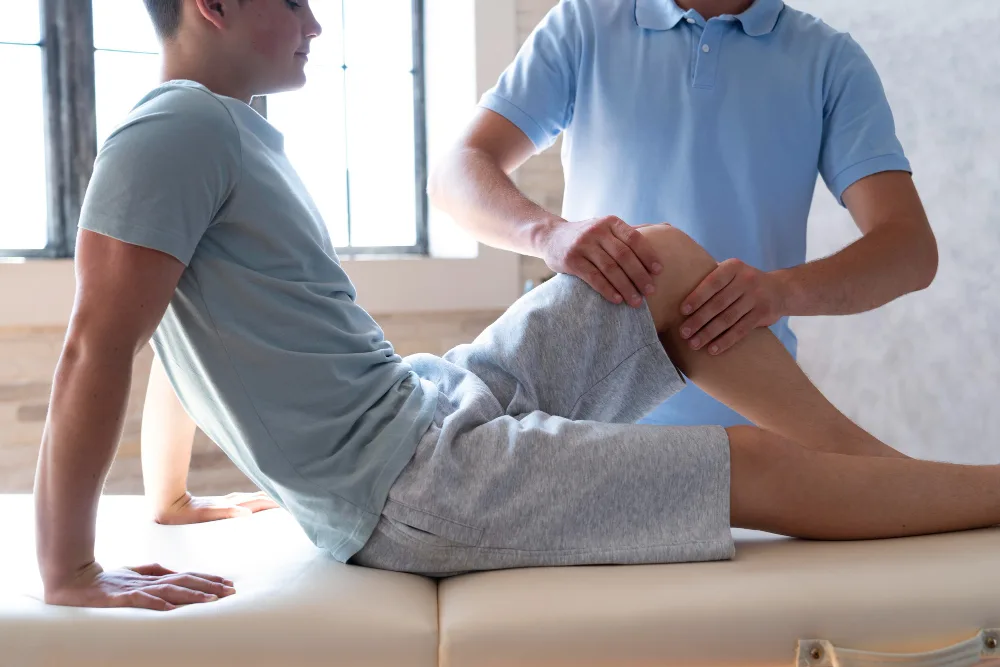
Knee pain can affect walking, stairs, exercise, work, sports, and everyday movement. At Get Back Physiotherapy, we assess the factors contributing to knee discomfort and create a physiotherapy plan based on your symptoms, movement, strength, and daily activities. Knee pain physiotherapy in Long Branch may be suitable for people dealing with sports injuries, arthritis-related symptoms, overuse, muscle weakness, movement problems, or recovery after an injury or procedure.
Our approach can include exercise therapy, manual therapy, movement training, mobility work, strength exercises, and education. The aim is to help you move with greater confidence while addressing factors that may be contributing to your knee symptoms.
Knee pain physiotherapy in Long Branch is a physiotherapy service focused on assessing and managing discomfort or movement limitations that affect the knees.
The knee is a complex joint supported by muscles, tendons, ligaments, cartilage, and surrounding tissues. Problems in any of these structures can affect how the knee moves and responds to daily activity.
Physiotherapy may be used to:
Treatment depends on the cause, severity, duration, and functional impact of the problem.
Knee pain physiotherapy in Long Branch can be relevant for people with different causes of knee discomfort and movement difficulties.
Running, cycling, gym workouts, recreational sports, and repetitive activity can place significant demands on the knee.
Age-related joint changes can contribute to stiffness, weakness, and difficulty with walking or stairs.
Athletes may require rehabilitation after sprains, strains, ligament injuries, meniscus problems, or other sports-related knee conditions.
Physiotherapy can support a gradual return to normal movement following an accident or injury.
Repeated discomfort during walking, squatting, stairs, or exercise may warrant a functional assessment.
Several situations may lead someone to seek knee pain physiotherapy in Long Branch, including:
A physiotherapist can assess how the knee behaves during movement and identify areas that may need attention.
The first stage involves reviewing your symptoms, activity levels, medical history, movement patterns, strength, flexibility, and functional limitations.
This provides a clearer picture of what may be contributing to your knee problem.
Exercises may focus on the quadriceps, hamstrings, glutes, calves, and other muscles supporting lower-limb function.
The exercise plan can progress as your strength and movement capacity change.
Restricted movement can affect walking, squatting, stairs, and exercise. Mobility exercises may be included when appropriate.
Hands-on physiotherapy techniques may be used alongside active exercises to address joint or soft-tissue movement restrictions.
Your physiotherapist may assess activities such as walking, squatting, stepping, or sport-specific movements to identify movement patterns that may place additional demand on the knee.
A home program can help you continue your physiotherapy work between clinic visits.
We begin by discussing your knee symptoms, activities, previous injuries, and current limitations.
Your physiotherapist examines movement, strength, flexibility, balance, and functional ability.
Based on the assessment, we establish treatment priorities and appropriate exercises or physiotherapy techniques.
Sessions may include exercise therapy, manual techniques, mobility work, strength training, and movement education.
Your movement, strength, symptoms, and activity tolerance are reviewed as treatment continues.
Exercises and activities can be adjusted as your physical capacity changes, with the aim of supporting a gradual return to your normal routine.
Choosing knee pain physiotherapy in Long Branch may help support several practical goals, depending on the underlying condition.
Potential outcomes include:
Results vary according to the cause of the knee problem, physical condition, consistency with exercises, and other individual factors.
Physiotherapy may be used as part of care for knee problems such as:
A clinical assessment can help determine whether physiotherapy is appropriate for your situation.
It may include an assessment, therapeutic exercises, mobility work, manual therapy, movement training, education, and a home exercise program.
Treatment duration varies. Some people need a short course, while others require several weeks or months depending on their condition and goals.
Physiotherapy can help people manage movement limitations associated with knee arthritis through exercise, strength training, mobility work, and activity planning.
Physiotherapy is commonly used during post-operative rehabilitation. The exercises and activity progression depend on the procedure and instructions from your surgical team.
If knee symptoms are affecting walking, stairs, exercise, work, or daily activities, an assessment may help identify possible contributing factors and appropriate next steps.
Referral requirements can vary based on your circumstances and insurance coverage. Contact Get Back Physiotherapy to discuss your situation.
Bring relevant medical reports, imaging reports if available, information about previous injuries or procedures, and a list of activities that currently cause difficulty.
Get Back Physiotherapy provides knee pain physiotherapy in Long Branch for people looking for physiotherapy support within the Long Branch community and surrounding areas.
Depending on your location, our clinic may also serve people from nearby parts of Mississauga and the western Greater Toronto Area.
At Get Back Physiotherapy, knee rehabilitation centers on assessment, active exercise, movement, and functional goals.
Our physiotherapy team considers factors such as:
Rather than applying the same program to every person, treatment is adjusted according to the findings from your assessment and your changing physical capacity.
If your knee problem is connected with another injury or movement issue, related services may include:
These services may be used separately or alongside physiotherapy for knee-related problems, depending on your situation.
If knee symptoms are making everyday movement, exercise, work, or sports more difficult, knee pain physiotherapy in Long Branch can provide a structured starting point for assessment and physiotherapy care.
Contact Get Back Physiotherapy to discuss your symptoms and arrange an assessment. During your first visit, our physiotherapy team can review your concerns, assess your movement, and explain the next steps.
Phone: +1 416-259-0359
Address: 507 Lakeshore Rd E Ste 200, Mississauga, ON L5G 1H9, Canada