Last week I had a patient come in, let’s call her Sarah who’d been dealing with back pain for almost eight years. Eight years. She’d seen three physiotherapists, a chiropractor, two orthopedic surgeons, and spent an embarrassing amount of money on massage therapy. Nothing stuck. She’d do exercises, feel better for a week, then it’d come right back.
Within fifteen minutes of assessing her pelvic floor, I found her prolapse. Not a massive one, but enough. And the second I explained the connection, she actually got angry not at me, but at the system. ‘Why didn’t anyone ask me about this?’ she said.
That’s the problem I see every single day.
Why This Gets Missed
The issue isn’t that nobody knows about pelvic floor dysfunction and back pain. The research is there. It’s solid research. But there’s a massive gap between what the research says and what actually happens in clinics.
Most back pain patients get assessed from the waist up. Someone measures their range of motion, checks their lumbar stability, maybe does some imaging. The pelvic floor? Unless you specifically ask about it, it doesn’t get screened. And let’s be honest a lot of providers aren’t screening for it.
Part of it is the elephant in the room: pelvic health is still uncomfortable to talk about. Patients don’t bring it up. Providers don’t ask. So you have someone with obvious back pain who also happens to have pelvic heaviness or pressure, and the two never get connected because nobody’s looking at the system as a whole.
I had another patient, Maria, who spent two years doing core strengthening exercises because a PT told her that would fix her low back. She was consistent. Really consistent. And nothing changed because her pelvic floor was so compromised that every ‘core exercise’ was actually reinforcing poor movement patterns. Once we addressed the prolapse and reset her pelvic floor function, the same exercises finally worked. But it took two years of frustration to get there.
What’s Actually Happening Underneath
Here’s the thing about the pelvic floor: it’s not just doing continence work. That’s only part of what it does.
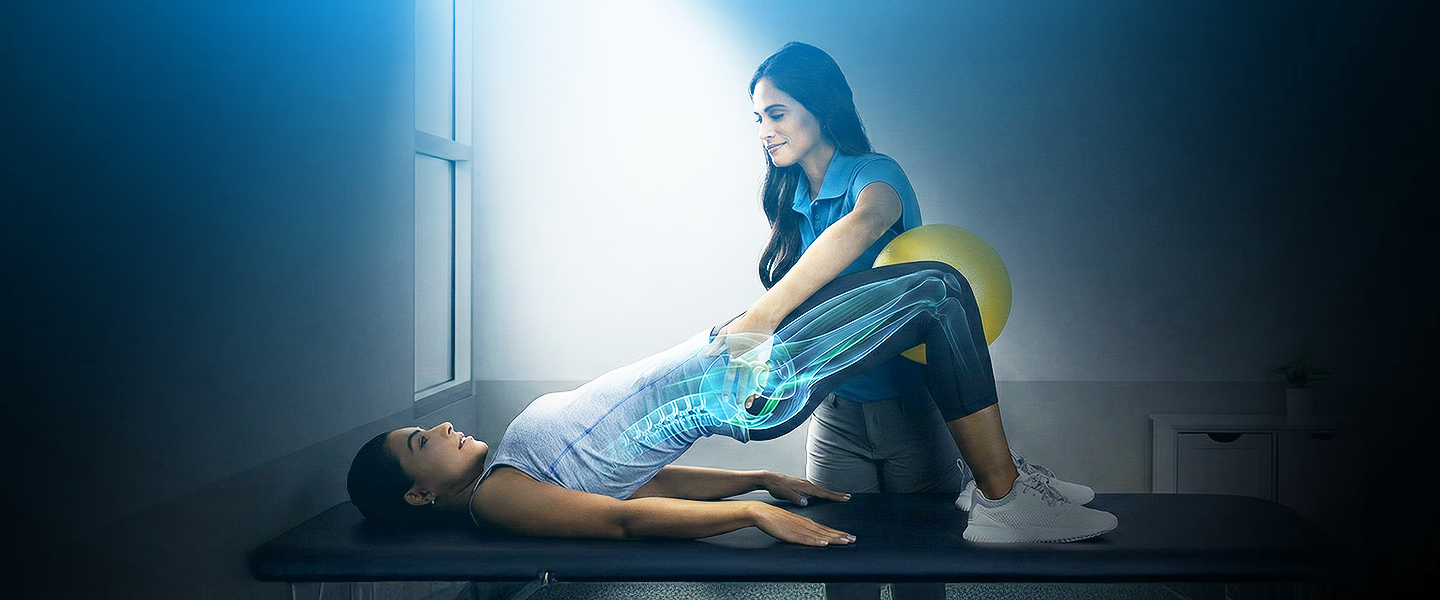
The pelvic floor is part of what we call your ‘deep core system.’ It’s basically four structures that work together to stabilize your spine: your diaphragm up top, your transversus abdominis (the deepest abdominal layer), your multifidus (that deep spinal muscle), and the pelvic floor at the bottom. These four are like the walls of a pressurized cylinder. When they’re coordinated, your spine is stable. When one of them isn’t doing its job, the whole system falls apart.
When the pelvic floor gets compromised whether it’s weak, too tight, or dealing with prolapse it can’t hold up its end of the bargain. So what happens? Everything else compensates. Your back muscles work harder. Your glutes get tight. You change how you move, even unconsciously. You might tuck your pelvis under, or avoid certain movements, or just walk differently to avoid that feeling of heaviness or pressure.
Over weeks and months and years, all that compensation becomes chronic pain. And the person thinks it’s a disc problem or a muscle strain, when really the root issue is much lower.
Pelvic Organ Prolapse: What You’re Actually Dealing With
Prolapse happens when one or more of your pelvic organsbladder, uterus, rectumshift down from where they should be and press against or into the vaginal wall. It’s most common after childbirth, but it happens without pregnancy too. Age, heavy lifting jobs, chronic constipation all of it adds up.
Here’s what people don’t realize: you can have prolapse without dramatic symptoms. Not everyone has that sensation of heaviness or a bulge. Some people just feel… off. Like something’s not quite right. And that vagueness is actually part of why it gets missed.
But here’s what I want you to understand: prolapse changes your biomechanics whether you feel it dramatically or not.
Your pelvic floor can’t do its job. The organs are under tension. The tissue is stretched abnormally. The muscles that are supposed to be doing the core stability work are now just trying to hold something up that they shouldn’t have to hold up. So they get tired. They get weak. And your back ends up taking the load.
Your movement changes. I watch patients do this without realizing it. They protect. They tense their glutes. They hold their breath. They avoid bending in certain ways. It’s the body’s way of trying to manage that sensation of heaviness or that fear that something’s going to shift. But all of that changes how force travels through your spine.
The nerves in that area start complaining. The sacral nerves that supply your pelvic floor also have connections all the way up to your lower back and hips. When those nerves are irritated, you don’t necessarily feel it in your pelvis. You feel it as low back pain or sacral pain or hip aching. And you treat it as a back problem when really it’s a pelvic problem.
I see this so often. Referred pain that gets misdiagnosed as purely musculoskeletal.

So What About Pessary?
A pessary is basically a small support device that goes into the vagina and holds the prolapsed organs back up where they belong. It’s not new technology. It’s been around forever. And honestly, it’s a solution that got sort of pushed aside when surgery became more common. But it actually works really well.
What people don’t understand is that by doing that one thing supporting the organs a pessary can have this immediate effect on back pain. I’m not exaggerating. I’ve had patients feel different within days.
Here’s why: once the organs are supported, the pelvic floor muscles suddenly aren’t under that abnormal load anymore. They can actually relax. They can start working the way they’re supposed to. And all those protective patternsthe glute tension, the pelvic tucking, the guarding a lot of that just melts away because the body doesn’t feel like it needs to protect anymore.
One of my patients, Jennifer, called me three days after her pessary fitting saying her back pain had dropped by about 40%. Not completely gone, she still needed pelvic floor rehabilitation but the immediate relief was shocking to her. She’d been in pain for five years. Five years.
The other thing is that with the organs supported, pelvic floor exercises actually become effective. Before pessary, if the prolapse is severe, doing Kegel exercises can actually feel worse. The muscles can’t contract through their full range. But once you put the organs back, suddenly those exercises can work the way they’re supposed to.
What Actually Happens When You Come In
We don’t just slap in a pessary and send you home. That’s not how this works.
First, we do a real assessment. I want to know your obstetric history, your current symptoms (all of them, not just the pelvic stuff), how your back pain actually presents, whether you leak urine or have bowel issues, how this is affecting your life. Then I do a pelvic floor examination to see what we’re dealing with what type of prolapse, how much, what the tissues look like.
Then we trial fit pessaries. Because here’s the thing: pessaries come in different shapes and sizes. There’s no one device that works for everyone. I might try a ring pessary, or a cube, or a Gellhorn, depending on your anatomy and your lifestyle. We’re looking for something that stays in place, doesn’t cause pressure or discomfort, and actually works for you.
Once we find the right one, we teach you how to manage it. Some patients self-insert and remove daily. Some leave it in and come in for cleaning periodically. It depends on the device and what works with your life.
And the whole time, we’re also doing pelvic floor physiotherapy. The pessary handles the structural piece. Physiotherapy rebuilds muscle function. They work together.
When This Actually Works vs. When It Doesn’t
Here’s my honest take: for mild prolapse, you might not need a pessary at all. Pelvic floor rehab alone can be really effective. I’ve had patients completely resolve mild prolapse with consistent physiotherapy.
For moderate to severe prolapse, especially if it’s causing back pain, the pessary and physiotherapy together are the magic combination. The pessary gives immediate relief. Physiotherapy builds lasting change.
But and this is important, it doesn’t work if you’re not doing the physiotherapy. A pessary isn’t a cure. It’s a support tool. If you just put in the pessary and don’t address the underlying pelvic floor dysfunction, you’re managing a symptom, not fixing the problem. And eventually, you might have issues with the pessary itself. Tissue irritation. Discharge. Discomfort.
Also, I’ll be real: some people don’t like the idea of a pessary. They don’t want something inserted. They want to fix it through exercise alone. And sometimes that works. But sometimes it doesn’t, and then they’re frustrated because they expected the physiotherapy to do what the pessary could do faster.
I had a patient who refused pessary fitting initially. She wanted to strengthen her way out of it. After six months with minimal progress, she reconsidered. Six weeks after getting the pessary, she had the breakthrough she needed and could finally progress with her rehab.
Why We Take This Approach
Look, I get why back pain and pelvic floor dysfunction get treated separately. They’re different systems, anatomically. And most patients don’t connect them because the symptoms are in different places. But that’s not how the body works. The body is integrated. Your pelvic floor is part of your core. Your core supports your spine. If one piece isn’t working, it affects everything else.
The patients who get better are the ones we can convince to look at the whole system. Not just the back pain. Not just the pelvic pressure. The whole thing.
And yes, I know not everyone feels comfortable talking about their pelvic floor. I know some people come in with back pain and feel weird bringing up the fact that they sometimes feel heaviness in their pelvis. That’s why I ask directly. That’s why I normalize the conversation. Because the minute we can connect those two piecesback pain + pelvic symptoms suddenly treatment becomes so much more effective.
Who Should Actually Try This
Honestly? If you have chronic back pain that hasn’t responded to standard treatment, you should at least get screened for pelvic floor dysfunction. You should specifically ask for it. You should ask about prolapse.
This applies if you’ve had kids, especially if you’ve had multiple pregnancies or difficult deliveries. It applies if you do heavy lifting for work. It applies if you’re dealing with chronic constipation or straining. It applies if you’re postmenopausal and things just feel different.
It also applies if you have that vague sense of heaviness or pressure down there especially if it gets worse at the end of the day and your back hurts. Don’t wait.
Pessary fitting is appropriate for almost any woman with diagnosed prolapse who wants to manage it conservatively. We fit them for women who don’t want surgery. Women who are waiting for surgery. Women who’ve had surgery and are having recurrence. Pregnant women who want to manage prolapse while they’re carrying. Women who just need immediate relief while they’re doing pelvic floor rehab.
The only caveat: get it fit by someone who knows what they’re doing. An incorrectly fitted pessary can cause more problems than it solves tissue irritation, discharge, discomfort, or it just falls out because it doesn’t fit right.
A Note on Why You Haven’t Heard About This
I think part of the problem is that pessary fitting isn’t as lucrative as surgery. Pessaries are cheap. They’re reusable. They don’t require hospitalization or ongoing medical procedures. So there’s not a huge financial incentive to promote them.
Also, pelvic health physiotherapy requires specialized training that a lot of general physiotherapists don’t have. It’s more hands-on work. It takes longer. It’s more nuanced. Some practices just don’t go there.
And women are used to being told that back pain is a back problem and pelvic issues are separate. The system doesn’t naturally connect them unless someone is actively looking for that connection.
But the women who come in with both issues and actually get an integrated assessment? They usually get better. That’s what keeps me doing this work.