I had been told it was normal..
I had been suffering in silence..
Until that day when my pelvic muscles began compensating for my ignorance.
After all, especially we women hardly think about the pelvic floor before giving birth. We really don’t bother openly discussing pelvic floor issues like we do other health problems.
I had been there too. Fortunately, I came across one of the most patient-focused physiotherapy care in Ontario, Mississauga. I received the guidance to get rid of my pelvic pain and the emotional weight that came with it.
So I sat and wrote for those who are still struggling like mine. I hope this will help you to find the right way sooner.
What I Thought Was Normal Turned out to be Professional Pelvic Floor Physiotherapy Care
Mine or yours, the pelvic floor has a range of motions. From going fully contracted to fully relaxed, it should work smoothly without constant discomfort, light ache, or heavy pain.
Trust me, when it’s not, it feels strained, a light tight or weakened. And, I felt all those during different types of situations.
Leaking and burning pain eventually became common
This was the first subtle hint that I never imagined could be a sign of danger.
Every time I sneezed, laughed loudly, or lifted weights, I slightly peed. I rushed to urinate. The discomfort didn’t end even after emptying my bladder. Along with it, the burning sensation became natural.
It was when I googled and convinced myself that it’s nothing more than urinary incontinence. There, I found Kegel exercises and practised them as a quick relief.
Honestly, I might have solely trusted it if I hadn’t had a high-intra abdominal contraction that made things worse and threw me off to physiotherapy care.
The bowel movement was disturbed frequently
Then this was the symptom that really shook me.
I hardly missed the intake of high fiber and nutrient dense bowls and ample amounts of water. Still, there was a feeling of upsetting guts and causing constipation.
I got frustrated. I might not realize the deep down reason if I didn’t speak with my pelvic floor physiotherapist. I learned how bowel movement isn’t always absolutely caused by diet, but how the rectum works.
The relaxed pelvic floor plays a significant role in allowing the rectum to open without straining and emptying the bowels completely.
Sitting longer felt uncomfortable
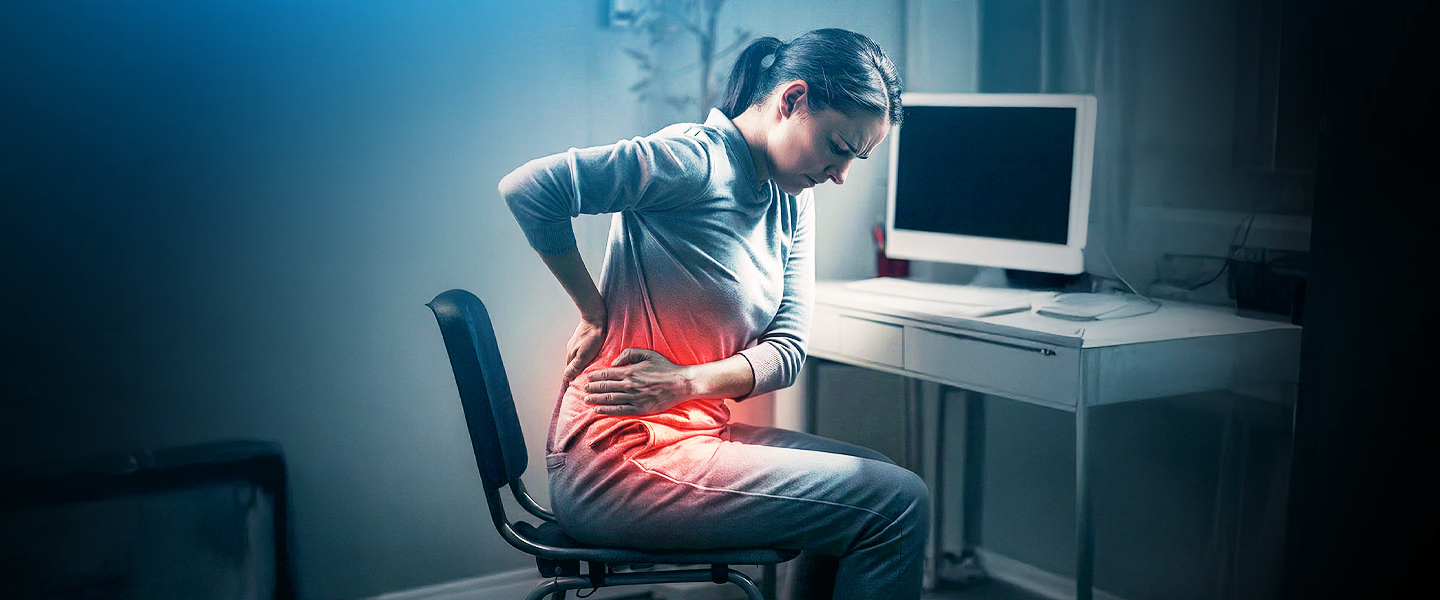
Not gonna lie, sitting straight for more than 20-40 minutes became a joke even though I exercised. A deep ache at my lower back made me feel like I was sitting on a hot coal.
Eventually, it became intolerable as time passed. It worsened especially while standing or walking after a longer sitting than usual. My hip was forced, and the tissue in my pelvic floor became oversensitive.
No surprise, it started affecting my pelvic floor health.
My physiotherapist explained how slouching flattens the pelvic floor. How a swayback exaggerates pelvic curve. And, both changes decide how much pressure the pelvic floor can handle, especially during prolonged sitting.
Pelvic heaviness was the new normal
Yeah, you heard it right.
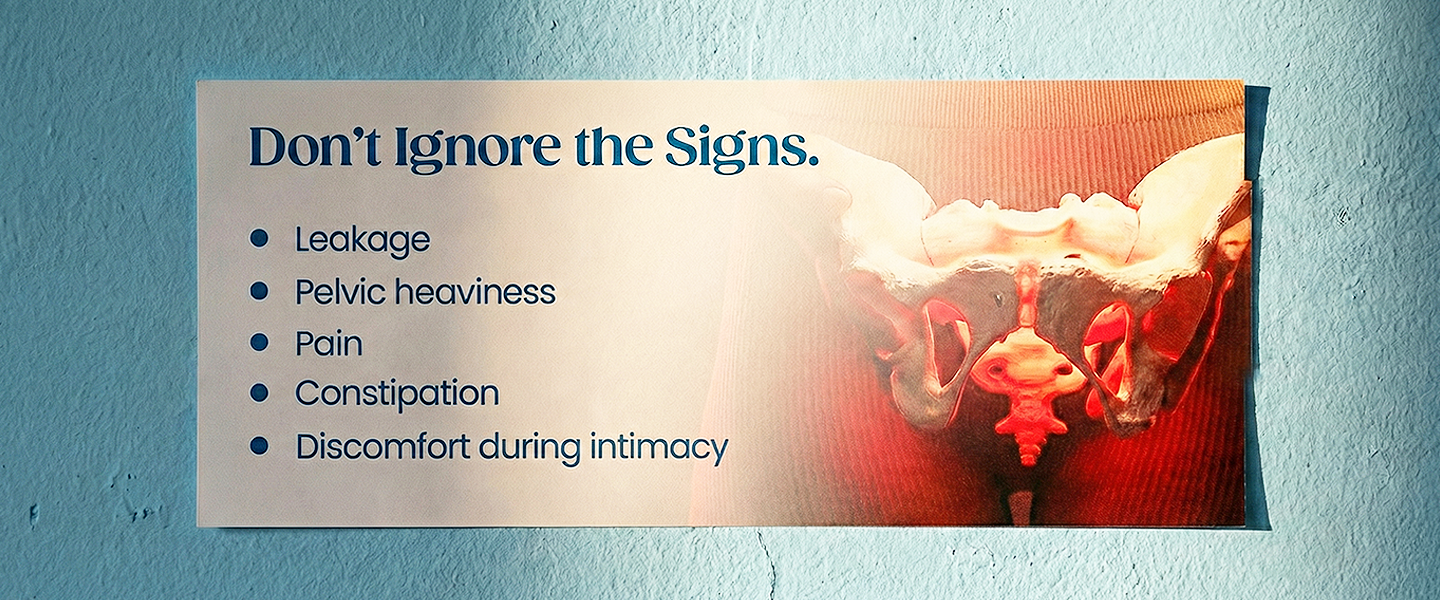
Without any constructive reason, my pelvic floor felt like it was pulling downward. There were times it felt like a tampon slipping down, even when there wasn’t one.
Leading with curiosity, I examined myself on my own. I used a mirror to check vaginal openings to ensure that there’s nothing different than general anatomy.
Guess what, on a surface level, there was nothing to be worried about. But the mild sensation that told me something was wrong. Fun fact, it awkwardly worsened at the end of the day. It pushed me to discuss it with my physiotherapist. Otherwise, it might turn into chronic pelvic organ prolapse (POP).
Last but not least, it felt like hell during intercourse
It was hard to accept. But now I’m not ashamed of saying it very upfront.
I felt sharp pain during intercourse. Not just externally in the labia, but I felt it deep inside near the cervix. It didn’t stop during or shortly after the activity, but persisted for hours and even after days.
I screamed, felt scared, avoided the activity entirely, and it affected my relationship. More of it, I was emotionally burdened, and that was when I decided to get a physiotherapist’s help.
How did I Learn and Keep My Pelvic Floor Healthy
The symptoms got intense. And, I had no choice but to take the guidance of a professional physiotherapist from a patient-focused pelvic floor physiotherapy care in Ontario, Mississauga. Because by that time, I followed basic workouts at home. I moved into intense workouts under the guidance of a personal trainer at the gym. But nothing went as well as expected.
Why? No one talked about or assessed how my pelvic floor health was.
Our pelvic floor isn’t a single organ but a web of muscles. It can be contracted or relaxed anytime without being noticed. And, without professional physiotherapy care, we draw on other muscle groups as well. That first interaction with an experienced physiotherapist from Get Back Physiotherapy made me understand it.
So, I trusted the process. What worked for me?
- Their experienced physiotherapists uphold privacy and respect from the first interaction. They approached a thorough detailing about my daily life, medical history, and sexual activity. And, they did it with utmost care, sensitivity, and professionalism.
- They stepped with a gentle though detailed assessment to find out how strong my pelvic floor muscles are, what type of prolapse I had, and the root cause of pain there.
- This pessary fitting clinic in Ontario helped me understand how a pessary can support pelvic organ prolapse (POP) or stress urinary incontinence (SUI) without surgery. And, how I could comfortably insert, remove, and clean it on a daily basis.
More than just a routine treatment, it was a full-scale support. From educating myself to getting comfort throughout the recovery treatment, it gave me everything.
If you’ve made it till here, you’re not alone in feeling this way, nervous, anxious, confused. And, if you’ve been living with any of the symptoms for weeks or months, trust me, you need an expert physiotherapist’s help. Otherwise, they’ll not go away on their own.